
TV & YouTube: Which Leads the Pack?
- Alex Weller

- Jun 25
- 2 min read

The debate between YouTube and traditional television as advertising platforms has become increasingly important as media consumption habits continue to evolve.
Here we share our thoughts and highlight the findings from ThinkBox's Now & Next Event which occurred earlier this year, with a few stats we think you’ll agree are worth paying attention to.
While television has traditionally been regarded as the dominant medium for reaching mass audiences, YouTube emerged as a powerful digital alternative, offering sophisticated targeting capabilities and highly measurable results.
Cost has also long been a key point of differentiation.
Television advertising is often perceived as requiring substantial investment in both production and airtime, making it seem out of reach for smaller businesses. By contrast, YouTube advertising is renowned for its lower barrier to entry, making video advertising accessible to startups and small-to-medium-sized enterprises.
However, the advertising landscape has evolved significantly.
Broadcasters now have access to increasingly sophisticated datasets, whether through first-party subscriber data or third-party sources such as Mastercard and Experian. As a result, television advertising can now be targeted with remarkable precision. In fact, many would argue that broadcaster data offers a more reliable and accurate view of audiences than that available through many digital platforms.
This enhanced targeting capability means that reducing wasted impressions is no longer exclusive to social media and video-sharing platforms. Furthermore, the proliferation of TV channels and the rapid growth of broadcaster-owned streaming services have lowered the barriers to entry for television advertising. The cost of advertising on TV is often far less prohibitive than many businesses assume; for example, we have delivered impactful campaigns for clients with budgets starting from as little as £5,000.

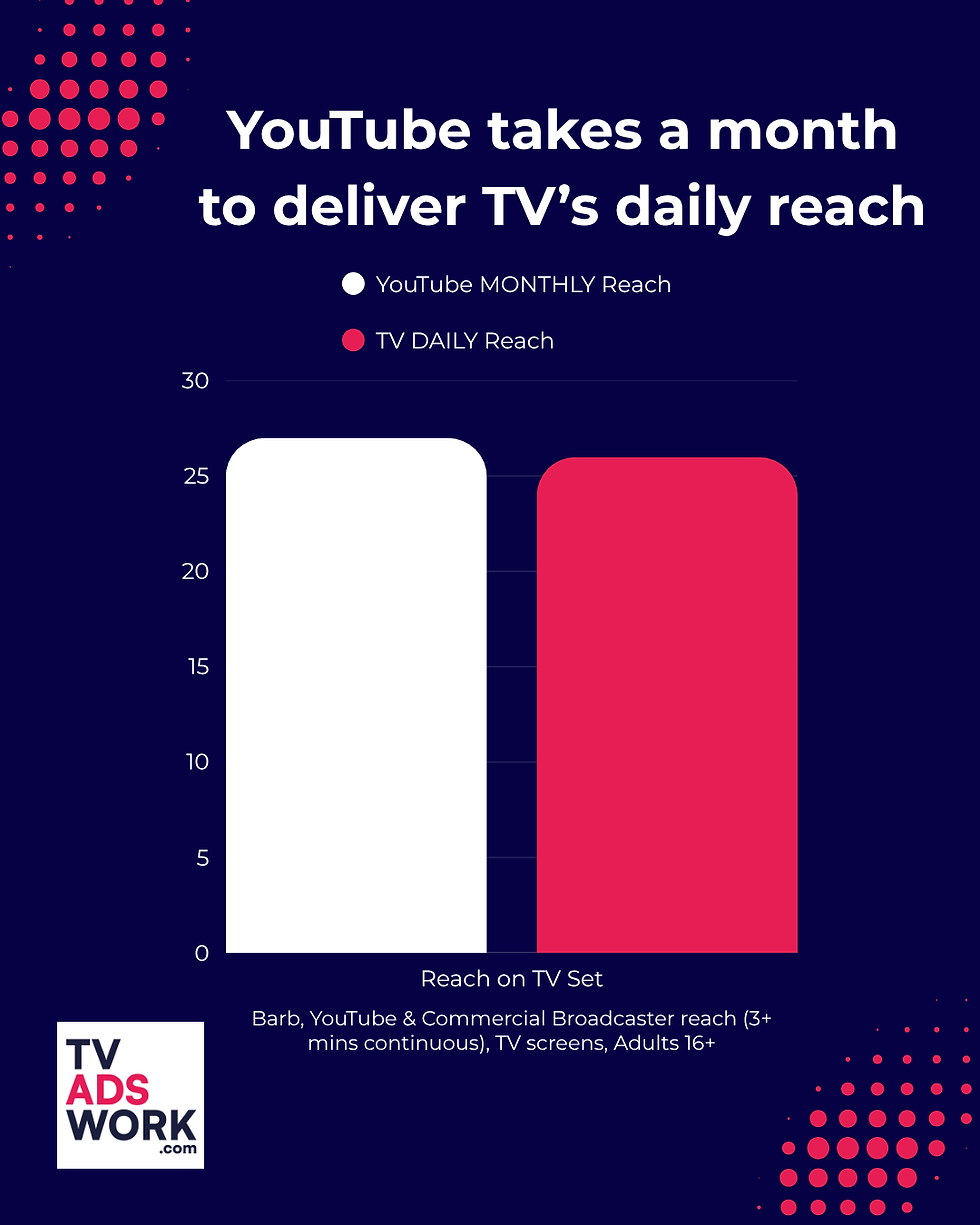

There is also an important distinction between cost and value.
Unlike online video advertising, television commercials cannot simply be skipped. TV advertising benefits from higher levels of trust, greater perceived credibility, stronger audience attention and recall, and association with premium content. It is also frequently consumed as part of a shared viewing experience, amplifying its impact and memorability.


This is not to suggest that YouTube and other social media platforms do not have an important role to play. They undoubtedly do. However, they are most effective when integrated into a broader marketing strategy that combines the strengths of multiple channels. By complementing digital activity with television and other media, brands can overcome many of digital marketing's limitations while maximising reach, credibility, and effectiveness.
If you'd like to explore TV advertising as part of your brand marketing, get in touch with us today at hello@tvadswork.com


Comments